

Home / The Charge / energy
energyRevimit vs. Competitors: Why We’re the Smart Choice for Energy
Compare caffeine pouches on what matters: dose control, nicotine-free status, sugar, added ingredients and use-case fit, and where Revimit fits (or doesn't).
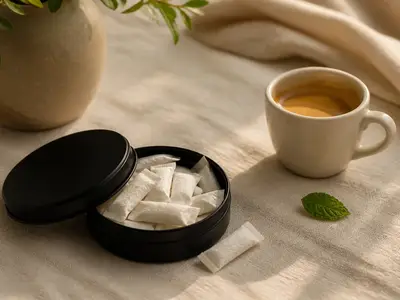
Caffeine pouches are small, tobacco-free packets placed under the lip, where caffeine is absorbed through the lining of the mouth. As the category has grown, the products in it have started to differ in ways that matter: how much caffeine each pouch contains, whether they are nicotine-free, what else is added to the formula, and which situations they suit. Choosing well is less about brand loyalty and more about matching those attributes to how you actually use caffeine.
If you are new to the format, it helps to first understand what caffeine pouches are and how they work. From there, the sensible way to compare products is on transparent, checkable dimensions rather than emotional claims. Below are the criteria that make the biggest practical difference, and how Revimit is built around each one.
How to Compare Caffeine Pouches: The Criteria That Actually Matter
Marketing language across this category tends to converge on the same adjectives — clean, smart, next-level. None of those are checkable. When you strip them away, a caffeine pouch is really defined by a handful of measurable attributes:
- Dose per pouch — how much caffeine you actually get, and how easy it is to control your total intake.
- Nicotine-free status — whether the product contains nicotine at all.
- Sugar and oral profile — sugar content and how the pouch behaves in the mouth.
- Added ingredients — anything beyond caffeine, and whether it is present at a meaningful amount.
- Portability and use-case fit — how well it slots into your day, your work, or your training.
Revimit is designed around these dimensions deliberately: 50 mg of natural caffeine per pouch, nicotine-free and tobacco-free, zero sugar, with B-vitamins (B3, B6 and B12), 20 pouches to a tin. The rest of this guide explains why each of those choices matters, and where a different product might serve you better.
Dose Control: Why 50 mg Per Pouch Matters
Caffeine is one of the most researched stimulants there is, and the dose-response relationship is well understood. For most healthy adults, EFSA considers single doses of up to about 200 mg and daily intakes up to 400 mg unlikely to raise safety concerns (EFSA, 2015). For reference, a typical cup of coffee contains roughly 95–120 mg.
The practical advantage of a pouch is not that it is stronger — it is that the dose is fixed and visible. Each Revimit pouch delivers a known 50 mg, which makes it straightforward to titrate your intake across a day and stay comfortably within sensible limits. That is harder with coffee, where cup sizes and brew strength vary widely, and with some energy drinks that combine large caffeine loads with other stimulants.
A 50 mg dose is a middle-ground choice. Some nicotine-replacement style pouches carry only trace caffeine and won't produce a functional lift; some high-stimulant products push 100 mg or more per unit, which can bring on jitters, a raised heart rate and a sharper comedown in sensitive users. Fifty milligrams is enough to be noticeable without being an all-or-nothing hit — and if you want more, you simply take a second pouch and know exactly what you have added.
Nicotine-Free Positioning and What It Means
Because caffeine pouches physically resemble nicotine pouches, the two are easy to confuse — but they are not interchangeable. Revimit contains no nicotine and no tobacco. Its only active stimulant is caffeine. That matters if you want the ritual and convenience of an under-the-lip pouch without introducing nicotine and its dependence potential. We cover the distinction in detail in caffeine pouches vs nicotine pouches.
One honest clarification: nicotine-free does not mean risk-free. Avoiding nicotine removes one specific source of dependence, but caffeine is still an active stimulant that can cause insomnia, palpitations, anxiety or overuse if you take too much or take it too late in the day. Nicotine-free is a meaningful attribute, not a promise that the product has no downsides.
The Added-Ingredient Question: What Else Is in the Pouch
Many caffeine pouches are caffeine and little else. Some brands add nootropic-style ingredients such as L-theanine or citicoline to their formulas. Revimit's current formulation keeps it simple: natural caffeine plus B-vitamins (B3, B6 and B12), nothing else.
B-vitamins (B3, B6 and B12)
B3, B6 and B12 contribute to normal energy-yielding metabolism and to the normal function of the nervous system. They are not stimulants and won't add a "kick" of their own; they are included as supporting nutrients rather than as the source of the effect.
What about L-theanine?
L-theanine is an amino acid found in tea, and the caffeine–L-theanine combination is genuinely one of the better-studied pairings in nutrition research — we cover what it does and does not do in our piece on L-theanine and caffeine. Revimit's current formulation does not contain L-theanine. If a product you are comparing does contain it, judge it on the actual amounts listed, not on the reputation of the pairing.
The reasonable framing is this: added ingredients are there to complement caffeine, and the strongest, best-established effect in any caffeine pouch still comes from the caffeine itself.
Sugar-Free Profile and Oral Considerations
Revimit pouches are zero sugar and white, leaving no coloured residue. That contrasts with two common alternatives: sugary energy drinks, which add calories and are often acidic, and coffee-grind based pouches, where the coffee material can leave staining and residue. For anyone who values a low-sugar routine or works in close-contact settings, a clean, sugar-free pouch is a practical advantage.
That said, keep expectations grounded. There is limited direct research on caffeine pouches specifically as a format, and any product held under the lip involves prolonged local contact. If you are curious about the oral and general-health picture, our overview of whether caffeine pouches are safe lays out what the current evidence does and does not show.
Portability and Use-Case Fit
The clearest, most checkable advantage of a pouch is logistics. A tin of 20 fits in a pocket, needs no water, no cup, no fridge and no clean-up, and it works silently in a meeting, on a shift, mid-drive or between sets at the gym. Onset is generally quick because caffeine is absorbed through the mouth rather than waiting on digestion, though "faster onset" should not be read as "stronger" or "universally better" — it simply suits situations where brewing or drinking isn't convenient.
This is where a pouch earns its place: not by being categorically superior to coffee or energy drinks, but by being better _for certain situations_ — hands-free, portable, sugar-free and dose-controlled.
When Another Option May Fit Better
An honest comparison has to acknowledge where a pouch is not the right tool. Revimit will not suit everyone, and other formats are the better choice in several cases:
- You value the ritual of coffee or tea. If the warmth, taste and routine of a brewed drink are part of why you enjoy it, a flavourless pouch replaces a stimulant but not the experience. Coffee may simply be more satisfying.
- You want a very high single stimulant dose for training. Some pre-workout users deliberately want 150–300 mg of caffeine plus ingredients like beta-alanine or creatine in one hit. A 50 mg pouch is not designed for that; a dedicated pre-workout, or several pouches taken knowingly, would fit better.
- You want zero-stimulant focus support. If you are trying to reduce caffeine altogether, no caffeine pouch is the answer — non-stimulant approaches (sleep, hydration, L-theanine on its own, or workflow changes) are more appropriate.
- You are sensitive to caffeine or advised to limit it. If caffeine itself is the problem for you, the format doesn't change that. See the caution notes below.
The right amount and form of caffeine is the one that fits your body and your day — and sometimes that isn't a pouch at all.
Who Should Be Cautious
Because caffeine is the active ingredient, the usual caffeine precautions apply regardless of brand. Take particular care, and ideally speak to a health professional first, if any of the following apply to you:
- Pregnant or breastfeeding — lower caffeine limits are generally advised.
- Cardiovascular conditions, including arrhythmias or high blood pressure.
- Anxiety or panic sensitivity, which caffeine can worsen.
- Known caffeine sensitivity, or a tendency to poor sleep.
- Taking stimulant or other interacting medication.
- Under 18, for whom these products are not intended.
Frequently Asked Questions
How much caffeine is in a Revimit pouch compared with coffee?
Each pouch contains 50 mg of natural caffeine. A typical cup of coffee has roughly 95–120 mg, so one pouch sits below a standard coffee — with the difference that the dose is fixed and easy to track.
Are Revimit pouches really nicotine-free?
Yes. They contain no nicotine and no tobacco. The only stimulant is caffeine; the rest of the formula is B-vitamins (B3, B6 and B12) and a plant-fibre base.
What makes Revimit different from other caffeine pouches?
The combination of a controlled 50 mg dose, a nicotine-free and sugar-free profile, and a deliberately simple formula — natural caffeine and B-vitamins, with no nicotine, no sugar and no unnecessary additions. Whether that combination is right for you depends on how and when you use caffeine.
Will a caffeine pouch stain my teeth?
Revimit pouches are white and leave no coloured residue, unlike some coffee-grind based pouches. As with anything held in the mouth for long periods, ordinary oral hygiene still applies.
Can I just take two pouches for a stronger effect?
You can, and because each pouch is a known 50 mg it is easy to keep track of your total. Stay within sensible daily caffeine limits — up to about 400 mg a day for most healthy adults (EFSA, 2015) — and avoid taking caffeine too close to bedtime.
_This article is for general information only and is not medical advice. It is not a substitute for guidance from a physician, pharmacist or other qualified health professional. If you have a health condition, are pregnant or breastfeeding, or take medication, speak to a professional before using caffeine products._
If a portable, controlled 50 mg caffeine format fits your routine, explore Revimit's nicotine-free pouches. If it does not, that is fine too — the right amount of caffeine is the amount that works for you.