

Home / The Charge / lifestyle
lifestyleCaffeine Pouches vs Energy Drinks: The Honest Comparison
Energy drinks vs caffeine pouches: dose, sugar, crash and cost per 100 mg - an honest comparison of what each format does better, with EFSA daily-limit guidance.
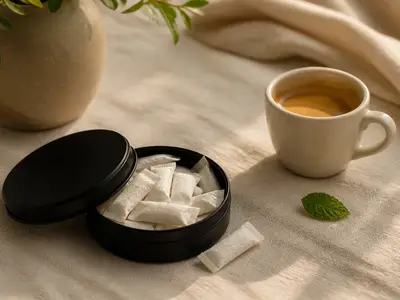
Both are ways to take caffeine. But they deliver it differently, and the differences matter more than most people think: a typical 250 ml energy drink carries roughly 80 mg of caffeine alongside about 27 g of sugar, while a caffeine pouch like Revimit delivers a fixed 50 mg dose with zero sugar and no liquid. One is a beverage; the other is a dosed, portable format you can use anywhere.
Here is the honest comparison - what each one actually is, and where each one falls short.
Caffeine: How Much, How Consistent
An average 250 ml energy drink contains about 80 mg of caffeine per can, and some large-format cans go further - Harvard's Nutrition Source notes servings with 160 mg or more. A caffeine pouch contains a fixed dose - Revimit pouches contain 50 mg each, so you always know exactly how much you are taking.
- Typical dose per serving · Energy drink: ~80 mg per 250 ml can (varies by brand) · Caffeine pouch: Fixed 50 mg per pouch
- Dose consistency · Energy drink: Varies by can size and brand · Caffeine pouch: Same every time
- How you take it · Energy drink: Drink it · Caffeine pouch: Place under the upper lip
- Liquid required · Energy drink: Yes · Caffeine pouch: No
- Sugar · Energy drink: ~27 g per 250 ml in sugared versions · Caffeine pouch: 0 g
- Calories · Energy drink: Typically 100+ kcal per can in sugared versions · Caffeine pouch: ~0 per pouch
The dosing difference is the practical one. With cans you multiply can size by brand strength and guess; with pouches you count pouches. A pouch gives you the same dose every time; cans vary by brand, size, and how much of the can you finish.
The European Food Safety Authority (EFSA) considers 400 mg of caffeine per day - and up to 200 mg in a single sitting - safe for healthy adults, from all sources combined (EFSA, Scientific Opinion on the safety of caffeine, 2015). One pouch is 50 mg - an eighth of that daily ceiling. A typical can, at ~80 mg, is about a fifth. Both formats leave room within the limit if you count carefully; pouches just make the counting trivial.
Sugar: The Part Nobody Puts on the Poster
This is where the formats genuinely diverge. A typical sugared 250 ml energy drink contains around 27 g of sugar - roughly seven teaspoons. That figure comes from the energy drink industry's own submission to a UK parliamentary committee (Energy Drinks Europe, END0011, 2018); a leading brand's nutrition label lists 27.5 g of sugars per 250 ml can, which puts the number on solid ground either way. Sugar-free energy drinks exist and solve this, but they keep the carbonation and the liquid.
A caffeine pouch has no sugar at all. No calories to speak of, nothing carbonated. If your reason for moving away from energy drinks is the sugar habit attached to them, the pouch removes it without removing the ritual.
(If sugar and dental health are your main concern, we cover the dental side of pouches in do caffeine pouches damage your teeth and are caffeine pouches bad for your gums - with the evidence, not the marketing.)
Convenience: Where You Can Actually Use Each One
Energy drinks need a can, ideally a fridge, a bin, and a moment. You cannot crack one open during a meeting, on the production floor, or halfway up a wall. You also cannot take one through a workout without carrying the can.
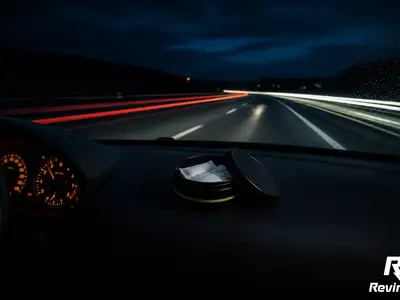
A pouch is a small tin that fits in a pocket. You place one under your upper lip and go on with whatever you were doing - driving, studying, gaming, working a shift. No liquid, no cans, no bathroom trips that follow 250 ml of fluid at 2 pm. If your caffeine moments happen in the car or on a night shift, we have separate guides: caffeine pouches for driving and our night shift guide.
- Situation: In the car · Energy drink: Possible, if you have a holder · Caffeine pouch: Simple - no liquid
- Situation: At your desk · Energy drink: Fine · Caffeine pouch: Discreet, no can noise
- Situation: Mid-workout · Energy drink: Impractical · Caffeine pouch: Works
- Situation: On a plane / train · Energy drink: Fine · Caffeine pouch: Fine
- Situation: During a meeting · Energy drink: No · Caffeine pouch: Yes, invisibly
The Crash Question
Many people report feeling a dip a while after a sugared energy drink. We describe that as commonly reported experience rather than a proven mechanism: a can adds a sugar load on top of its caffeine, and some people feel that combination unevenly. Sugar-free versions remove the sugar but not the ordinary caffeine pattern - the same rise and gradual fall you would get from coffee.
Pouches contain no sugar, so there is no sugar component to start with. What remains is plain caffeine behaviour, identical in principle to any other caffeine source. If you find caffeine wears off on you too fast generally, the problem may be caffeine tolerance rather than the format - worth checking before you blame the can.
Cost Per 100 mg
Compare caffeine the way you actually consume it: per 100 mg. A €2.50 branded can at ~80 mg works out to about €3 per 100 mg. A single Revimit tin is €5.99 for 20 pouches - 1,000 mg of caffeine - which is about €0.60 per 100 mg (€0.30 per pouch), and less when you buy several tins at once. Supermarket multipacks bring the branded-can price down, and very cheap own-brand large cans can narrow the gap per 100 mg - but compared with branded cans, the pouch is clearly the cheaper way to buy caffeine.
What Energy Drinks Do Better
Honesty cuts both ways. Energy drinks offer:
- Flavour and volume. Sometimes you want a cold drink, not a substitute for one. On a hot day, a pouch is not a beverage.
- Zero learning curve. Everyone knows how to drink a can. Pouches take one session to get used to (see how to use caffeine pouches).
- Social visibility. Sharing a round of energy drinks is a ritual; a pouch tin is not.
Who Should Not Use Either Format
The same people who should be careful with caffeine should be careful with both. Caffeine is not for children, and Revimit is strictly for adults 18+. If you are pregnant or breastfeeding, EFSA advises keeping total caffeine from all sources up to 200 mg per day (Scientific Opinion on the safety of caffeine, 2015) - and you should speak to your doctor. If you have a heart condition, anxiety, or trouble sleeping, talk to a healthcare professional before using any caffeine product, in any format. Nicotine-free does not mean risk-free; caffeine is still a stimulant.
Practical Guidance
If you are deciding between the two:
- Count your total caffeine. 400 mg/day is the EFSA ceiling for healthy adults; keep single sittings to 200 mg. One pouch is 50 mg - the maths is easy.
- Match the format to the moment. A cold drink on a hot day: the can. A caffeine format for the car, a shift, or a long work block: the pouch.
- Watch the sugar. If you drink two cans a day, you are adding ~54 g of sugar on top of everything else. Pouches add none.
- Do not stack carelessly. A can plus two pouches plus a coffee is still one shared caffeine budget.
The Evidence This Article Relies On
- EFSA NDA Panel (2015), Scientific Opinion on the safety of caffeine, EFSA Journal 13(5):4102 - safe daily intakes: 400 mg/day for healthy adults, 200 mg single dose, 200 mg/day during pregnancy.
- Eufic - Caffeine levels in different foods and drinks - typical energy drink caffeine content (~80 mg per 250 ml).
- Energy Drinks Europe (2018), written evidence END0011 to the UK Parliament Science and Technology Committee - the energy drink industry's own submission: a typical 250 ml sugared energy drink contains about 27 g of sugar.
- Harvard T.H. Chan School of Public Health, The Nutrition Source - Energy Drinks - caffeine and sugar ranges in large-format energy drinks.
Frequently Asked Questions
Are caffeine pouches better than energy drinks?
It depends on what you need. For a fixed, sugar-free dose you can use anywhere without a drink, pouches are more practical and more predictable. For flavour and the experience of a cold beverage, energy drinks still make sense. Neither is "better" in general - they solve different jobs.
Do caffeine pouches give you the same effect as an energy drink?
A pouch delivers 50 mg of caffeine; a typical can delivers ~80 mg plus sugar. The caffeine itself behaves like caffeine in any other format. If you want more, you can use two pouches - but stay within the EFSA daily guidance of 400 mg.
Can caffeine pouches replace energy drinks completely?
For the caffeine part, pouches cover the same ground - the same stimulant, at a dose you know in advance. What they do not replace is the drink itself. Some people end up with both: pouches for work and a can when they actually want a beverage.
Are caffeine pouches safer than energy drinks?
Both are caffeine products and neither is risk-free. Pouches remove the sugar, which is a real negative of sugared energy drinks. The caffeine itself carries the same considerations in both formats: safe within EFSA limits for healthy adults, and not for minors, pregnant women, or people with certain health conditions.
How many caffeine pouches equal one energy drink?
A typical 250 ml energy drink contains ~80 mg of caffeine, so one and a half 50 mg pouches match one can on caffeine content.
This article is for general information only and is not medical advice. Caffeine affects people differently. If you have a health condition, are pregnant or breastfeeding, or take medication, speak to a doctor or pharmacist before using caffeine products. Revimit is for adults 18+.
If a portable, controlled 50 mg caffeine format fits your routine, explore Revimit's nicotine-free pouches at our flavours. If it doesn't, that's fine too - the right amount of caffeine is the amount that works for you.