Caffeine Pouches vs Pre-Workout: Which Is Better for Your Training?

Pre-workout supplements have dominated gym bags for years. But caffeine pouches are quietly changing the equation. Here’s an honest, science-based comparison — no brand bias, just the data.
What’s Actually in Pre-Workout?
Most pre-workout formulas contain a mix of stimulants, amino acids, and compounds designed to increase performance. A typical scoop includes:
- Caffeine: 150–300mg (sometimes more)
- Beta-alanine: causes the characteristic skin tingling
- Creatine: useful for strength, but requires consistent daily intake
- L-citrulline: for blood flow and pump
- B vitamins, taurine, electrolytes: varies by brand
Sounds comprehensive. The problem is the caffeine dose. Many pre-workouts deliver 200–300mg in a single serving — 4–6x the dose in a REVIMIT pouch. That’s fine if you’re training hard and have a high caffeine tolerance. It’s a problem if you’re training at 7pm and want to sleep by 11.
What’s in a Caffeine Pouch?
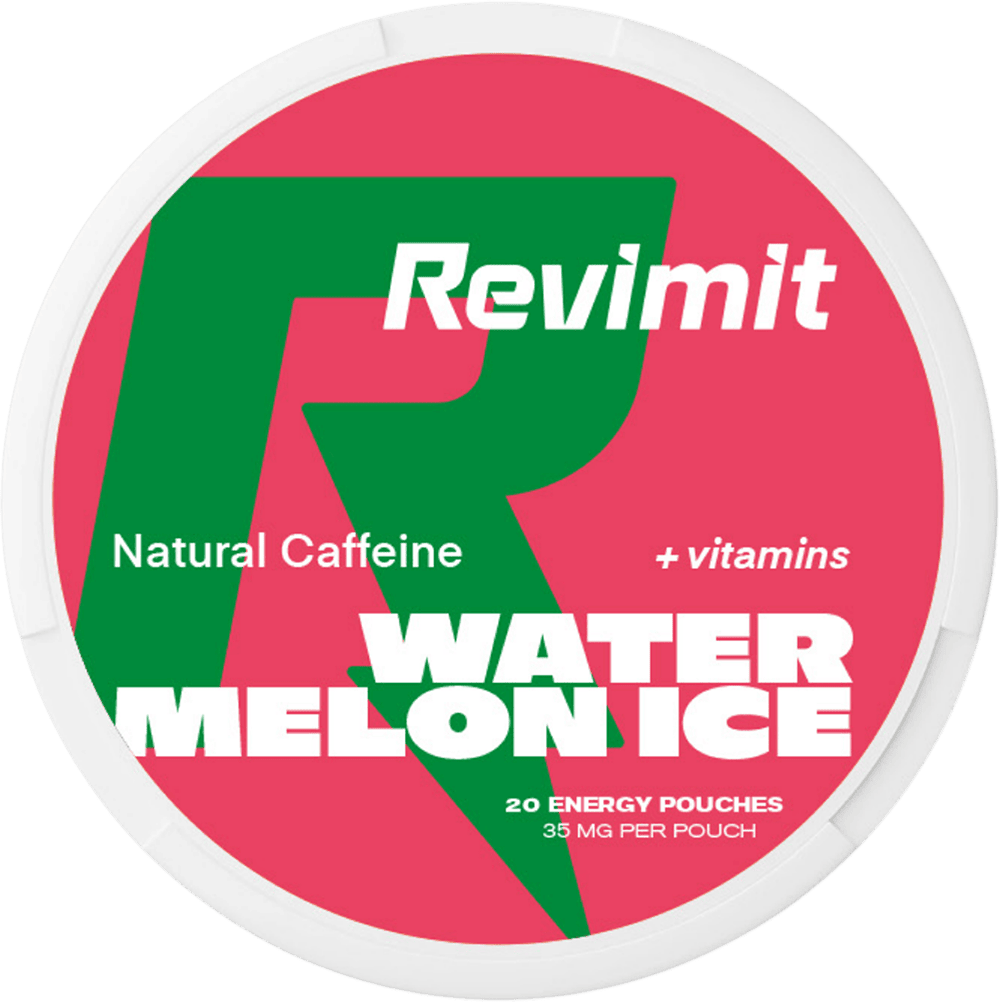
REVIMIT caffeine pouches contain 50mg of caffeine per pouch, plus L-theanine, Citicoline (CDP-Choline), B6, and B12 — all in a small, tobacco-free pouch placed between the gum and cheek.
The key difference is delivery method. Buccal absorption (through the oral mucosa) bypasses the digestive system and can produce a faster onset than swallowing — research suggests effects in 10–20 minutes (Kamimori et al., 2002). No mixing, no water needed, no 20-minute wait for the drink to absorb.
Head-to-Head: 5 Key Comparisons
1. Caffeine Dose
Pre-workout: 150–300mg per serving
REVIMIT pouch: 50mg per pouch
Winner depends on your goal. High-intensity training before competition? The larger dose may suit you. Regular training sessions where you also need to function mentally after? The controlled 50mg is more practical. You can always take 2 pouches if you want 100mg — the dose is in your hands.
2. Crash Risk
Pre-workout: High crash risk. A 2022 survey published in the Journal of the International Society of Sports Nutrition found that post-stimulant fatigue was the most commonly reported side effect of pre-workout use (Jagim et al., 2022). High doses spike energy fast — and the drop is equally steep.
REVIMIT pouch: The L-theanine in each pouch actively reduces the crash. Multiple RCTs — including Owen et al. (2008) and Giesbrecht et al. (2010) — demonstrate that caffeine + L-theanine produces smoother, more sustained alertness with less post-stimulant fatigue than caffeine alone.
3. Timing Flexibility
Pre-workout: Typically consumed 15–30 minutes before training. Commits you to a large caffeine load for the next 4–6 hours (caffeine half-life is approximately 5–6 hours). Training after 5pm means caffeine is still active at midnight.
REVIMIT pouch: 50mg clears your system significantly faster in practical terms. You can take one 30 minutes before training, another at halftime if it’s a long session, and your sleep is not compromised if you finish by 8pm.
4. Side Effects
Pre-workout: Beta-alanine causes paresthesia (skin tingling/flushing) in most users — harmless but uncomfortable. High caffeine can cause anxiety, elevated heart rate, and gastrointestinal distress. A 2019 study found that 54% of regular pre-workout users reported at least one adverse effect (Jagim et al., 2019).
REVIMIT pouch: At 50mg, side effects are rare in healthy adults. Mild gum sensitivity occasionally reported — typically resolves within minutes. No tingling, no flushing, no GI issues from mixing.
5. Convenience
Pre-workout: Requires a shaker, water, and a sink. It expires, clumps, and creates post-workout cleaning. Travelling with a tub of powder through airport security is its own adventure.
REVIMIT pouch: Fits in a pocket. No mixing, no shaker, no water. Works at your desk, in the gym, on the train, or before an early morning run. 20 pouches per tin, each tin fits in a jacket pocket.
When Pre-Workout Makes Sense
Pre-workout is genuinely useful for specific purposes:
- Max-effort strength sessions where you need the full stimulant stack (creatine, citrulline, beta-alanine + high caffeine)
- Competition preparation where peak performance matters more than sleep quality
- Morning training where the sleep disruption window doesn’t apply
If you’re in this category, pre-workout does what it’s designed to do.
When a Caffeine Pouch Makes More Sense
Caffeine pouches win on versatility and precision:
- Evening training sessions — 50mg won’t wreck your sleep
- Multiple daily sessions — stack 1–2 pouches without reaching dangerous daily totals
- Work + training days — use one for your commute, one before the gym
- When you want focus, not just stimulation — L-theanine + caffeine is more cognitively precise than caffeine alone
- Travel, outdoor sports, races — no logistics, no mixing
Can You Use Both?
Yes — but with awareness. If you take a 200mg pre-workout and then add a REVIMIT pouch, you’re at 250mg total. That’s within EFSA’s safe daily limit of 400mg, but close to it. Don’t stack them without knowing your total daily caffeine intake.
Many athletes use pre-workout for heavy training days and REVIMIT pouches for everything else — lighter sessions, active recovery, mental work, and travel.
The Bottom Line
Pre-workout and caffeine pouches solve different problems. Pre-workout is a dedicated performance supplement for high-intensity sessions. Caffeine pouches are a precision energy tool for daily use.
If you train 5 days a week and live an active life, you probably need both — or you replace pre-workout with the cleaner, more flexible option for 3 of those 5 days.
The 50mg + L-theanine combination in REVIMIT pouches isn’t designed to replace the max-effort pre-workout experience. It’s designed for the other 22 hours of your day — when you need sharp, clean energy without the crash, the tingling, or the 300mg caffeine hit at 6pm.
References
- Kamimori GH, et al. The rate of absorption and relative bioavailability of caffeine administered in chewing gum versus capsules. Int J Pharm. 2002;234(1-2):159-167.
- Owen GN, et al. The combined effects of L-theanine and caffeine on cognitive performance and mood. Nutr Neurosci. 2008;11(4):193-198.
- Giesbrecht T, et al. The combination of L-theanine and caffeine improves cognitive performance and increases subjective alertness. Nutr Neurosci. 2010;13(6):283-290.
- Jagim AR, et al. Common ingredient profiles of multi-ingredient pre-workout supplements. Nutrients. 2019;11(2):254.
- Jagim AR, et al. Safety of pre-workout supplements. J Int Soc Sports Nutr. 2022;19(1).
- European Food Safety Authority. Scientific Opinion on the Safety of Caffeine. EFSA Journal. 2015;13(5):4102.