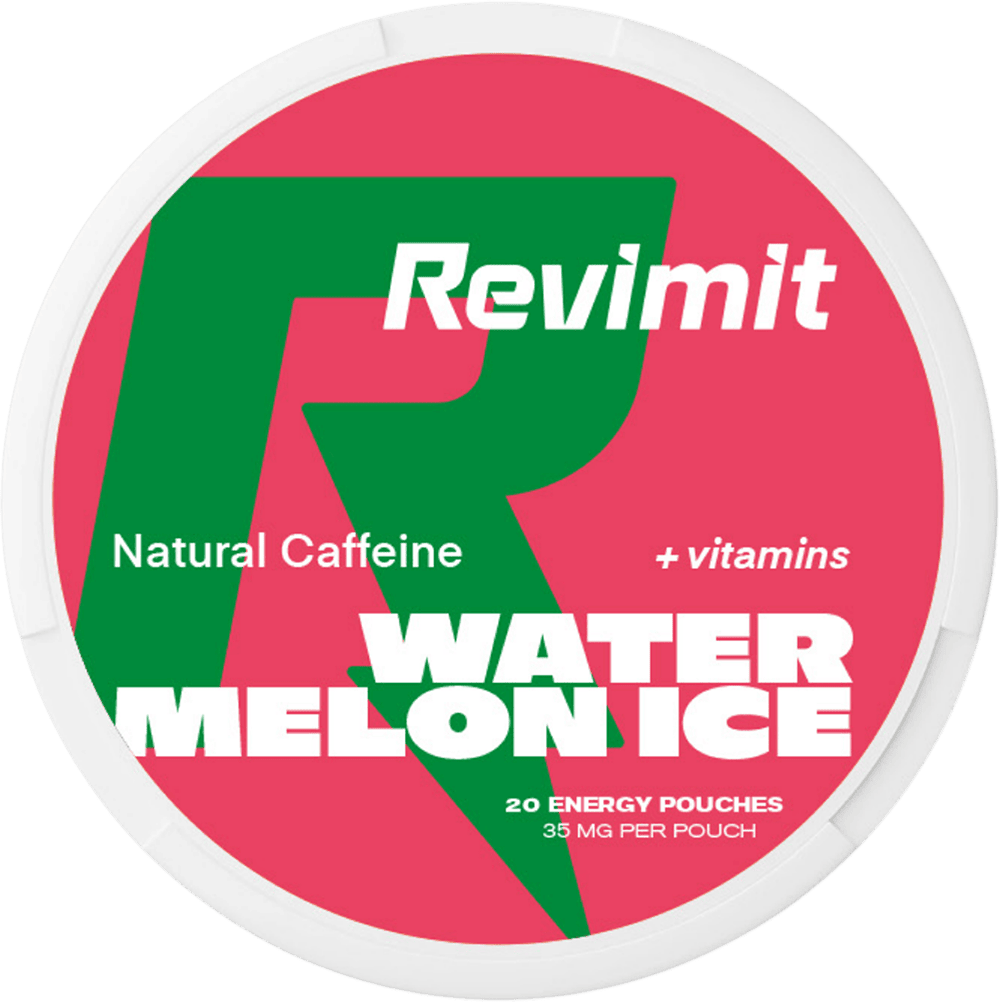
What Are Caffeine Pouches? The Complete Beginner’s Guide
Caffeine pouches are appearing in gyms, offices, and university libraries worldwide. If you’ve seen someone tuck a small packet under their lip and wondered what’s going on — this guide explains everything, including the science of how they actually work.
What Is a Caffeine Pouch?
A caffeine pouch is a small, pre-portioned packet — similar in appearance to a nicotine pouch or snus — that contains caffeine, flavourings, and typically additional active ingredients. It contains no tobacco and no nicotine.
You place it between your upper lip and gum and leave it there for 15–30 minutes. During this time, caffeine is absorbed through the buccal mucosa — the mucous membrane lining the inside of your cheek — directly into the bloodstream, bypassing your digestive system entirely.
The Science of Buccal Absorption
The buccal route of administration is well-established in pharmacology. The oral mucosa has a rich blood supply and high permeability to small lipophilic molecules — and caffeine qualifies. This is why buccal drug delivery is used for medications requiring fast onset, including certain cardiac and pain medications.
When you drink coffee or an energy drink, caffeine must pass through your stomach and small intestine before entering circulation. Peak blood concentration is reached in 45–60 minutes (Blanchard & Sawers, Journal of Pharmacokinetics and Biopharmaceutics, 1983). Buccal delivery shortens this window significantly, as caffeine avoids the digestive process entirely.
A 2025 pharmacology analysis published in The Conversation by Dr. Dipa Kamdar of Kingston University describes this mechanism: “Slip one under your lip and the caffeine goes straight into the bloodstream through your gums – bypassing the digestive system. The result? A jolt of energy that lands far quicker than a cup of coffee or tea.”
What’s Inside a Revimit Caffeine Pouch?
Revimit pouches are formulated for clean, sustained energy — not just a quick spike. Each pouch contains:
- 50mg caffeine — a moderate, controlled dose equivalent to roughly half a cup of coffee
- L-Theanine — an amino acid found naturally in green tea that modulates caffeine’s stimulant effects
- Alpha-GPC — a choline compound that supports acetylcholine production, linked to memory and focus
- B vitamins — B3, B6, and B12, which support energy metabolism at the cellular level
- Xylitol and monk fruit — natural sweeteners; sugar-free
Why L-Theanine Matters
L-Theanine is not just a filler ingredient. A randomised controlled trial published in Nutritional Neuroscience (Haskell et al., 2008, doi:10.1179/147683008X301513) found that combining caffeine with L-theanine produced significantly greater improvements in attention switching and reduced susceptibility to distraction compared to caffeine alone — with fewer jittery side effects.
A subsequent meta-analysis in Nutrients (Dodd et al., 2015, doi:10.3390/nu7115557) confirmed: “The combination of caffeine and L-theanine resulted in improvements in speed and accuracy of performance on attention-switching and alerting tasks, and was associated with reduced susceptibility to distracting information.”
The mechanism: L-theanine promotes alpha-wave activity in the brain — associated with calm alertness — while caffeine blocks adenosine receptors to reduce fatigue. Together, they produce what researchers call “alert relaxation.”
How Much Caffeine Is Safe?
For healthy adults, the European Food Safety Authority (EFSA) recommends a maximum of 400mg of caffeine per day, with single doses up to 200mg considered safe for most people (EFSA Panel, 2015, doi:10.2903/j.efsa.2015.4102).
At 50mg per pouch, Revimit leaves substantial room below these limits. Most users report optimal effects from 1–2 pouches, totalling 50–100mg — well within safe parameters.
Caffeine pouches are not recommended for:
- Pregnant or breastfeeding women
- People with anxiety disorders or heart conditions
- Anyone under 18
- Those who are caffeine-sensitive
How to Use a Caffeine Pouch
- Take one pouch from the tin
- Place it between your upper lip and gum — either side works
- Leave it for 15–30 minutes; you may feel a mild tingling as ingredients absorb
- Remove and discard — do not swallow
The effects typically begin within 10–15 minutes and last 1–3 hours. Unlike coffee, there’s no preparation time, no acid on your stomach, and no risk of spilling.
Common Questions
Are caffeine pouches addictive? Caffeine itself produces physical dependence with regular use — this applies equally to coffee, tea, and pouches. Gradually reducing intake prevents withdrawal effects (headache, fatigue).
Do they stain teeth? No. Unlike coffee or tea, caffeine pouches contain no chromogens — the compounds responsible for tooth staining.
Can I use them at work? Yes. They’re discreet, odourless, and require no equipment. Many users prefer them in meetings, on calls, or during commutes.
References: Blanchard J, Sawers SJ (1983). Comparative pharmacokinetics of caffeine. Journal of Pharmacokinetics and Biopharmaceutics, 11(2):109–126. | Haskell CF et al. (2008). The effects of L-theanine, caffeine and their combination on cognition and mood. Nutritional Neuroscience, doi:10.1179/147683008X301513. | Dodd FL et al. (2015). A double-blind, placebo-controlled study evaluating the effects of caffeine and L-theanine. Nutrients, doi:10.3390/nu7115557. | EFSA Panel on Dietetic Products (2015). Scientific opinion on the safety of caffeine. EFSA Journal, doi:10.2903/j.efsa.2015.4102. | Kamdar D (2025). Caffeine pouches deliver a fast hit — and hidden risks. The Conversation.